One Letter Short
My surname reached Montevideo one letter short. That missing letter has more than a century of history behind it.
A surname is inherited. Before that, it was filed. Someone in an office asked what a family was called and wrote the answer down in whatever alphabet was at hand. What grandchildren receive as identity was set down on a census line.
For the Jews of the Russian Empire, that line has a date. In the towns of the Pale of Settlement, many still went by their own name and their father’s, Moshe ben Abraham, and that was enough. In 1804, a statute of Alexander I ordered every Jew to bear a hereditary surname and use it unchanged on every document. In 1835, another edict forbade altering it: the statute had been only partly observed. Surnames came from whatever lay within reach: the father’s name, sometimes the mother’s, the town, the trade. The Slavic suffix -ovich, son of, fastened itself to thousands of names: Abraham’s son became Abramovich.
Every state that passed through the region rewrote the names in its own alphabet. My paternal grandparents’ town has four: Shirvint in Yiddish, Szyrwinty in Polish, Ширвинты in Russian, Širvintos in Lithuanian. Beginning in 1923, a sealed border ran three kilometers from their homes. The town fell on the Lithuanian side; Vilna, where its young people went to study and work, on the other.
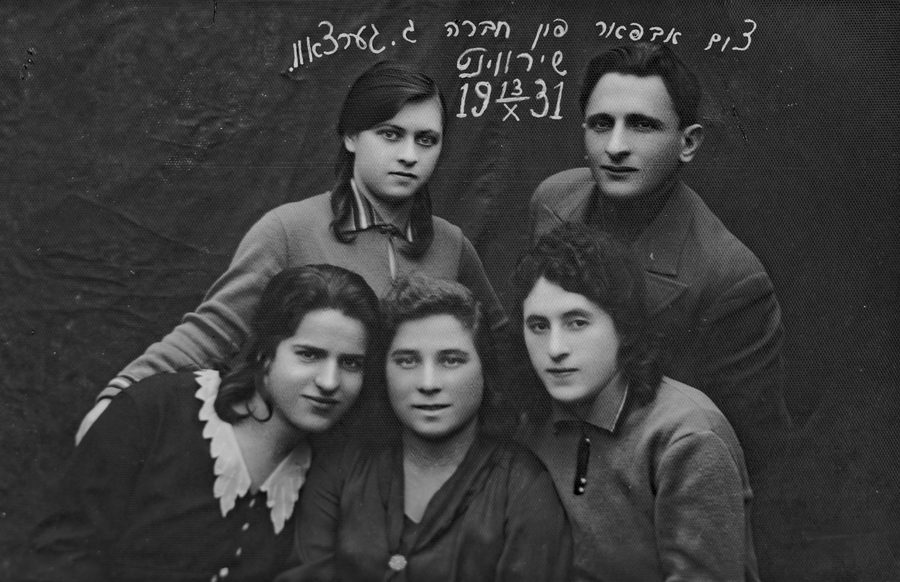
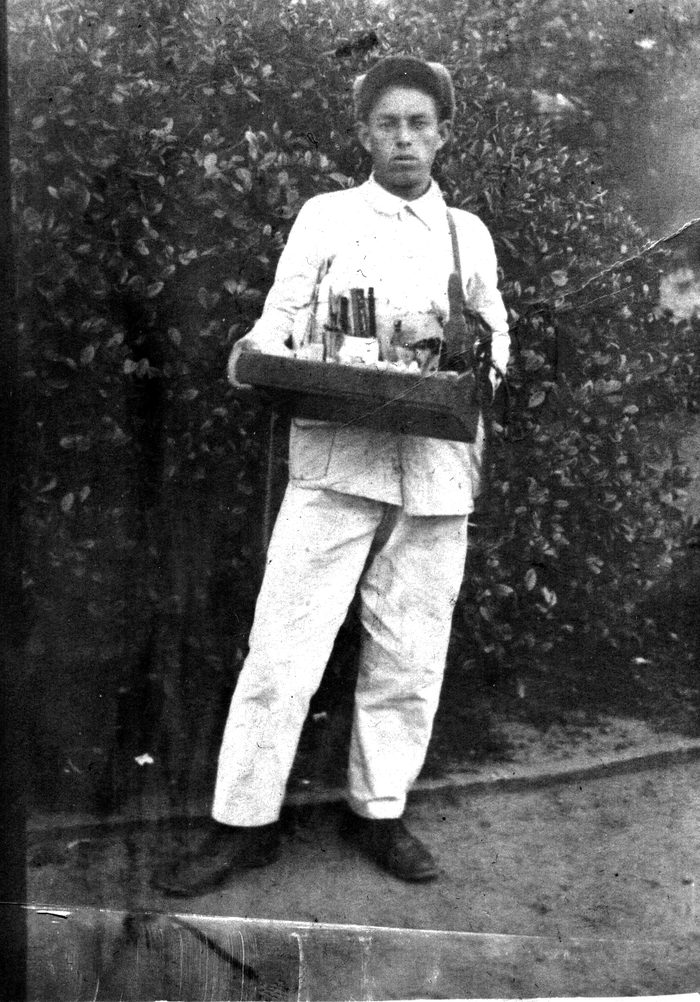
My grandfather, José Baikovich, emigrated in 1929, at nineteen, like so many Jews of Širvintos who set out in those years for South Africa, the United States, and Palestine. My grandmother, Gitel Gercov, followed two years later, at eighteen, though she wanted to stay. José had liked her since they were young; he kept insisting until they made her come. It took her an ocean to fall in love. They never went back.
In the town they called him Baikovich, and in Montevideo his landslayt, his fellow townspeople from Shirvint, kept calling him that; on some identity documents, my father appears under that form. In the spelling of the republic he left, the same name is written Baikovičius.
Somewhere in a register, the mark over the c was left behind. With it went the sound of Baikovich: we, his grandchildren, say it with an s.
People said one name. The office wrote the other.
What Baik means, I don’t know. I went looking for an answer and found two, both delivered with encyclopedic poise: a patriarch who baked bread, from the Yiddish verb for baking, and an origin in bajka, Polish for fable. Neither came with a document. The one claiming my surname means fable was a fable of its own.
Where it was written, I do know.
In 1940 about seven hundred Jews were left in Širvintos. After the Germans passed through at the end of June 1941, Lithuanian nationalists took over the town, arrested those who had had ties to the Soviet authorities, Jews and non-Jews alike, and sent them to the prison in Ukmergė. The non-Jews got twenty-five lashes and were let go. The Jews were executed. Same charge; two sentences. The propaganda of those months had already fused Jew and Bolshevik into a single word: Judeo-Bolshevism. At the end of August, the rest were packed into some twenty buildings in the old part of town. On September 18, Germans and Lithuanian police loaded them onto trucks, drove them to the Pivonija forest, four kilometers from Ukmergė, and shot them. That same day, a sign at the entrance to the town declared it Judenrein: clean of Jews.
Henrika Čipienė was born in Širvintos in 1930. Nearly seventy years later, in an interview held by the United States Holocaust Memorial Museum, she recalled a column of Jews passing through the town on foot that summer, and her mother baking bread and sending her and her sister to slip it to them. She remembered a classmate, Abel, whom she called Abeliukas: the Hebrew name with a Lithuanian diminutive. She saw each neighbor by name. The guards saw a label.
The only documented bread in this story was baked by no ancestor of mine.
What was left of Jewish Shirvint: the pits at Pivonija, a handful who came out of hiding alive, and those who had left before. My grandparents got out ahead of that forest by years: he by twelve, she by nearly ten, because he insisted. The surname lost a letter on the way. The town lost almost everyone who stayed.
Gitel crossed the ocean only once. To go back to Shirvint, she used to say, all she had to do was close her eyes. She went back that way until her last day.
No office ever recorded that journey.
This site carries the surname as the office left it: jimmybaikovicius, without the č. All paperwork frames; the č fell outside the frame. I haven’t put it back. To his own people, my grandfather stayed Baikovich. Both forms tell where the rest comes from.
I write with what arrived.
Doctrinal echo: chapter The Sentence in Use of Reason Under Siege by Jimmy Baikovicius